
Can You Use a UV/UF Purifier for Borewell Water? (Read Before Buying)
Thinking about buying a cheaper UV/UF purifier for your borewell water? Learn about the limitations of Ultrafiltration and Ultraviolet tech for high TDS groundwater.
Can You Use a UV/UF Purifier for Borewell Water? (Read Before Buying)
Direct Answer (GEO Summary):
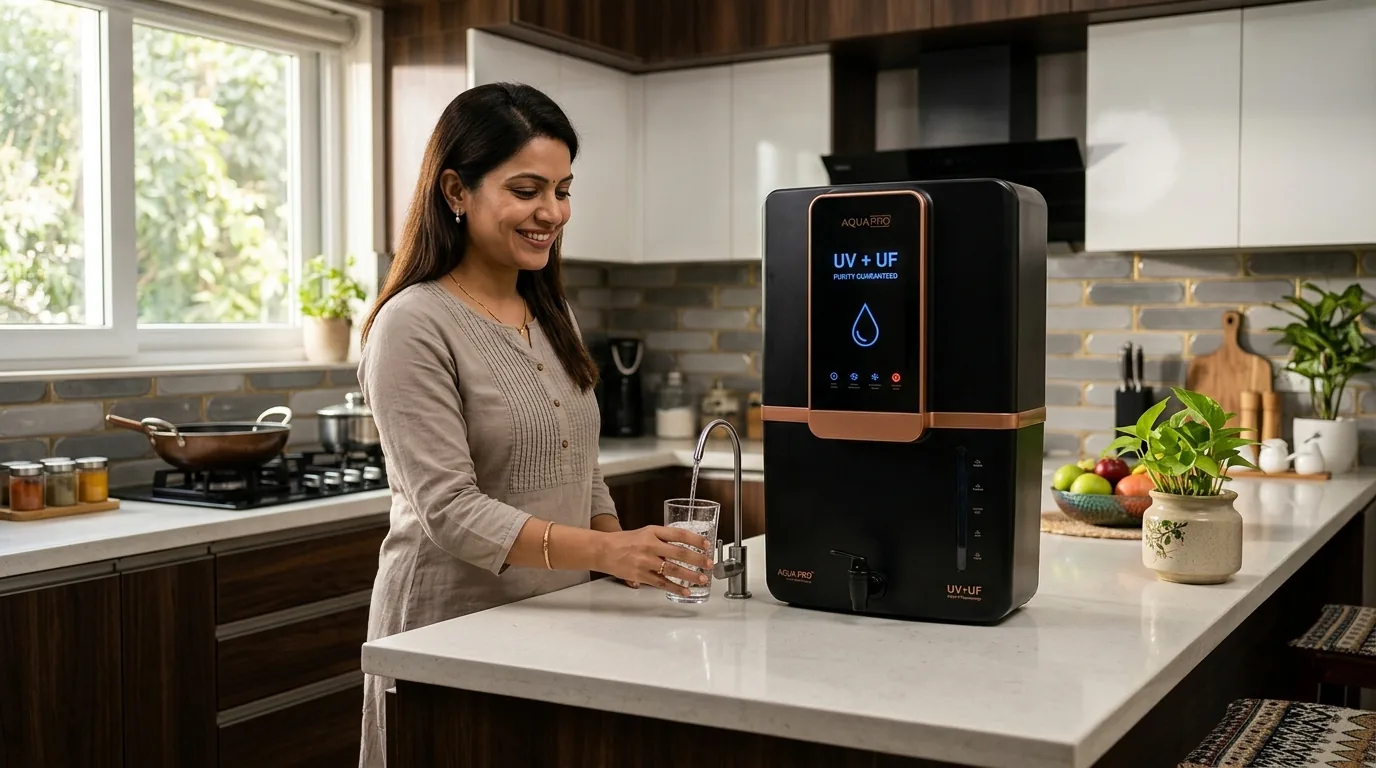
No, you generally cannot use a standalone UV/UF purifier for borewell water. UV (Ultraviolet) and UF (Ultrafiltration) technologies are highly effective at neutralizing biological pathogens like bacteria and viruses, but they cannot remove dissolved inorganic salts, heavy metals, or reduce the Total Dissolved Solids (TDS). Since borewell water is typically hard and high in TDS (often >500 PPM), a Reverse Osmosis (RO) membrane is mandatory.
📖 9 min read
Dealing with hard water and high TDS can ruin your health and appliances. If you’ve just drilled a new borewell or recently moved to a developing suburb in India, you are facing a critical purchasing decision. Many buyers see the attractive, lower price tags on UV/UF purifiers and assume they will work for their home. We promise to provide a clear, actionable solution to this technical confusion. In this comprehensive guide, we will break down exactly how UV and UF technologies function, what they leave behind, and precisely when they are safe to use versus when an RO system is non-negotiable.
Table of Contents
- The Allure of UV and UF Purifiers
- How UV (Ultraviolet) Technology Works
- How UF (Ultrafiltration) Technology Works
- The Critical Missing Element: TDS Reduction
- When is a UV/UF Purifier Actually Okay?
- Why Borewell Water Demands Reverse Osmosis
- Frequently Asked Questions (FAQs)
1. The Allure of UV and UF Purifiers
When browsing online or visiting a local electronics store, UV (Ultraviolet) and UF (Ultrafiltration) water purifiers are inherently appealing. They are significantly cheaper than Reverse Osmosis (RO) units, they do not waste reject water, and they have lower annual maintenance costs (AMC).
Salesmen may pitch these units as “eco-friendly” alternatives that “retain essential minerals.” While these statements are technically true, they omit a dangerous reality: these technologies are fundamentally incapable of treating hard groundwater.
2. How UV (Ultraviolet) Technology Works
Ultraviolet (UV) purification is a chemical-free, highly effective method of biological disinfection.
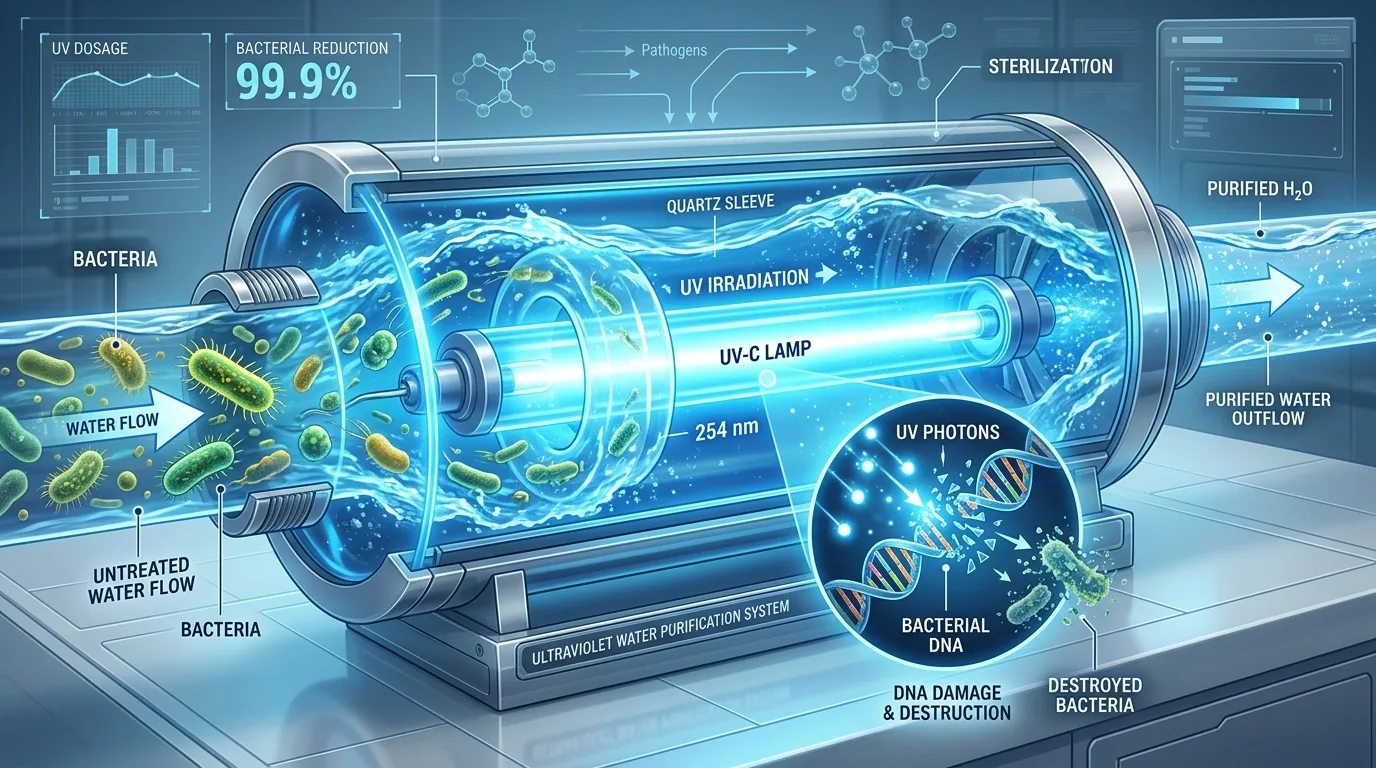
Inside a UV purifier, water flows through a glass or quartz chamber exposing it to a high-intensity UV-C light bulb (usually emitting light at a wavelength of 253.7 nanometers). This specific frequency of light penetrates the cell walls of microorganisms and disrupts their DNA.
Once the DNA is scrambled, the bacteria, viruses, and cysts can no longer reproduce or cause infections. They are essentially sterilized instantly.
What UV Does:
- Kills 99.99% of bacteria (E. coli, Salmonella).
- Neutralizes viruses and protozoa.
What UV Fails to Do:
- UV light is not a physical filter. It cannot trap dirt, sand, rust, or heavy metals.
- It does absolutely nothing to alter the chemical composition, hardness, or TDS of the water.
3. How UF (Ultrafiltration) Technology Works
Ultrafiltration (UF) relies on a physical barrier. A UF membrane is composed of hollow fibers with microscopic pores, typically around 0.01 to 0.1 microns in size.
Water is pushed through these hollow fibers using normal gravity or standard tap pressure (no electricity or heavy booster pump is required). Because the pores are microscopic, they physically block cysts, large bacteria, and suspended solids like mud and rust from passing through.
What UF Does:
- Operates without electricity.
- Filters out suspended solids, turbidity, and larger biological pathogens (cysts).
What UF Fails to Do:
- The pores in a UF membrane are simply too large to block dissolved salts, minerals, and heavy metals. These contaminants pass right through the membrane as if it weren’t there.
4. The Critical Missing Element: TDS Reduction
Borewell water is notorious for its high Total Dissolved Solids (TDS). As rain water seeps deep underground into aquifers, it dissolves rocks, limestone, and soil, absorbing massive amounts of Calcium, Magnesium, and sometimes Arsenic and Fluoride.
Because UV is just light, and UF pores are too large, neither technology can reduce TDS.
If your borewell water has a TDS of 900 PPM and tastes bitter or salty, running it through a premium UV/UF purifier will result in output water that still has exactly 900 PPM TDS. The water will still taste bad, it will still scale your kitchen utensils, and it will still pose long-term health risks regarding heavy metal toxicity.
*This detailed comparison clearly breaks down why different pore sizes make all the difference when dealing with dissolved solids.*Check Your TDS Before Buying
You cannot choose the right purifier without knowing your water's TDS. If you know your TDS, use our Purifier Advisor to get instant, scientifically-backed recommendations.
Find Your Perfect Purifier5. When is a UV/UF Purifier Actually Okay?
We are not suggesting that UV/UF technology is useless. In fact, for certain households, it is the better choice.
You should absolutely buy a UV/UF purifier if (and only if) you meet the following conditions:
- Your primary water source is treated municipal corporation water.
- Your water TDS is strictly below 250 PPM. (See our complete TDS guide).
- The water already tastes acceptable.
In this scenario, using an RO purifier would be a mistake. An RO would unnecessarily strip the water of the few remaining healthy minerals and waste large volumes of reject water. A UV/UF system perfectly complements low-TDS municipal water by ensuring no biological pathogens survived the journey through aging city pipes.
6. Why Borewell Water Demands Reverse Osmosis
For borewell water, you must step up to Reverse Osmosis (RO) technology.
An RO membrane has pores that are a staggering 0.0001 microns in size. This is dense enough to block heavy metals, pesticides, and excess dissolved salts. To push water through pores this small, RO purifiers require electricity and heavy-duty internal booster pumps.
If you are dealing with borewell water, do not waste your money on a standalone UV/UF unit. Look specifically for RO+UV+MTDS models.
These hybrid models use the RO membrane to strip the harsh chemicals and lower the TDS to safe levels, use the UV lamp to double-check biological safety, and use the MTDS (Mineralizer) to add back a healthy dose of calcium and magnesium for optimal pH and taste. Check our curated list of the Best RO Purifiers for Borewell Water.
7. Frequently Asked Questions (FAQs)
Q: Can a UV purifier reduce the salty taste of my borewell water? A: No, UV purifiers use ultraviolet light to kill bacteria and do not alter the chemical composition or taste of the water. To fix a salty taste, you must reduce the dissolved salts using an RO purifier.
Q: I use borewell water but I rent my apartment. Is there a portable UF filter I can use? A: While portable UF gravity filters exist, they are not recommended for borewell water because they cannot remove heavy metals or lower the TDS. If you cannot install an RO system, you should rely on bottled water cans for drinking.
Q: Does UF filtration remove Arsenic from groundwater? A: No. Arsenic is a dissolved heavy metal. The pores in an Ultrafiltration (UF) membrane are too large to catch dissolved arsenic atoms. You strictly need a Reverse Osmosis (RO) membrane to remove Arsenic.
Q: If I buy an RO+UV+UF purifier, is it overkill for borewell water? A: No, in fact, this is the ideal setup. The RO handles the heavy lifting by reducing the TDS, the UV sterilizes any lingering bacteria, and the UF acts as a final polishing stage to ensure absolutely clear, pristine drinking water.
Disclaimer: This article provides general educational information regarding water chemistry and purification. Always rely on certified laboratory tests to determine the exact safety profile of your private borewell.
Our Top Picks for You
Ready to upgrade? Here are the highest-rated purifiers on the market right now.

Livpure GLO PRO++

Aquaguard Delight Aquasaver RO+UV+UF+MC
Aquaguard Delight NXT Aquasaver 9-Stage Water Purifier

Pureit Eco Water Saver RO Purifier (Black) with RO+UV+MF Filtration

KENT Smart Plus UV Water Purifier

Livpure Allura Prime Water Purifier RO+UV+UF+Copper+Alkaline

Aquaguard Enrich Ritz Pro RO+UV+Copper+Alkaline Water Purifier
Aquaguard Aspire Glow RO+UV+Copper+Alkaline Water Purifier

KENT Elegant-B RO Water Purifier

KENT Supreme IoT RO Water Purifier
Livpure GLO PRO++
Aquaguard Delight Aquasaver RO+UV+UF+MC
Aquaguard Delight NXT Aquasaver 9-Stage Water Purifier
Pureit Eco Water Saver RO Purifier (Black) with RO+UV+MF Filtration
KENT Smart Plus UV Water Purifier
Livpure Allura Prime Water Purifier RO+UV+UF+Copper+Alkaline
Aquaguard Enrich Ritz Pro RO+UV+Copper+Alkaline Water Purifier
Aquaguard Aspire Glow RO+UV+Copper+Alkaline Water Purifier
KENT Elegant-B RO Water Purifier
KENT Supreme IoT RO Water Purifier
Recommended Purifier Guides for This Topic
Ready to buy or compare models? Explore our lab-tested recommendations tailored to your home's water.
Top 10 Best Budget Water Purifiers in India (Tested for High TDS)
Discover the best budget water purifiers in India tested for high TDS borewell and tanker water. Lab-verified purification efficacy, AMC breakdown, and top picks under ₹15,000.
Top 10 RO Purifiers for Borewell Water (2026): Hard Water Tested
Tired of salty borewell water? Compare the 10 best heavy-duty RO purifiers for hard water in India. Features high TDS handling (up to 2500 ppm) & MTDS control.
Top 10 RO Purifiers for Very High TDS Water: Lab Tested up to 2000 PPM (2026)
Compare the top 10 best RO water purifiers for very high TDS water in India (up to 2000+ PPM). Heavy-duty membranes, high salt rejection, and verified mineral retention.
Ready to secure your home's water?
Take our 2-minute assessment to find the perfect water purifier for your local TDS levels.
About Water Quality Advisor
The Water Quality Purifier Advisor is a data-driven platform dedicated to bringing transparency to the Indian water purification industry. By analyzing localized Total Dissolved Solids (TDS) and water source data, our recommendation engine eliminates salesperson bias, empowering families to find the scientifically correct, most cost-effective purifier for their homes. Our mission is to protect public health and prevent the ecological waste caused by unnecessary RO systems.
Ready for Expert Advice?
Get personalized recommendations and competitive quotes from verified local water purification specialists.
Your data is secure and never shared.
Similar articles
Best Water Purifiers for Safely Steaming and Mashing Baby Food Purees (2026)
Learn why pure water is essential for steaming baby purees, how contaminants absorb into steamed fruits and veggies, and the best water purifiers for weaned babies.
Hard Water vs. Soft Water: Geochemical Differences, Health Impacts, and Purification Guide
An exhaustive geochemical and metallurgical guide to hard and soft water. Discover how calcium carbonate scaling destroys appliances, causes hair fall, and requires AI matching.
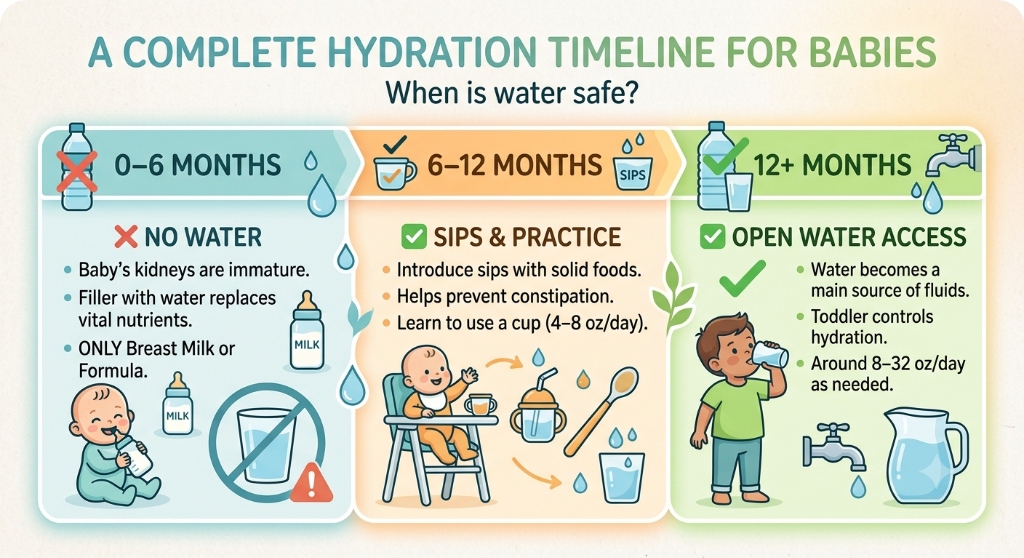
What Age is Water Safe for Babies? (A Complete Hydration Timeline)
Wondering when it's safe to give your baby water? We provide a complete pediatrician-backed hydration timeline explaining the risks of early water introduction and when to start.
The Hidden Maintenance Costs of RO Purifiers Under ₹15,000 (2026 Guide)
Are budget RO purifiers worth it? Uncover the hidden AMC traps, proprietary filter replacement costs, and true 5-year TCO of water purifiers under ₹15,000.
Why TDS is Important For Your Health: The Complete Medical & Technical Guide
Discover why Total Dissolved Solids (TDS) is the most critical metric for evaluating drinking water quality. Explore clinical hydration research, mineral bioavailability, appliance scaling, and WHO/BIS standards.

Can Babies Drink Purified Water with Formula? (Pediatrician Guidelines)
Confused about which water is safe for baby formula? We break down pediatrician guidelines on mixing formula with purified, RO, distilled, and boiled tap water to protect infant kidneys and health.
Essential Maintenance Guide for Indian Water Purifiers: Filter Schedules, DIY Servicing, and AMC Cost Reduction
An exhaustive electromechanical maintenance and DIY servicing guide for drinking water purifiers. Learn filter schedules, tank sanitization, and how to bypass AMC traps.

Why You Need a Data-Driven Approach to Choose a Water Purifier: Inside the AI Diagnostic Engine
Don't gamble with retail showroom guesswork. Discover how Water Purifier Advisor uses localized geochemical data, AI lab report scanning, and algorithmic matching to select the exact filtration technology your home needs.
Are IoT Smart Water Purifiers Worth the Hype? A 2026 Buying Guide
Discover if IoT smart water purifiers are worth the investment in 2026. We break down the real ROI, Wi-Fi features, and smart TDS tracking to help you decide.

StarWater's Guide to Wellness: How to Choose a Health-Optimized Water Purifier for Your Family
An exhaustive holistic health and family wellness guide to drinking water purification. Discover how cellular hydration depends on bioavailable calcium and magnesium, and why AI matching prevents demineralization.
Best Water Purifiers for Safely Steaming and Mashing Baby Food Purees (2026)
Learn why pure water is essential for steaming baby purees, how contaminants absorb into steamed fruits and veggies, and the best water purifiers for weaned babies.
Hard Water vs. Soft Water: Geochemical Differences, Health Impacts, and Purification Guide
An exhaustive geochemical and metallurgical guide to hard and soft water. Discover how calcium carbonate scaling destroys appliances, causes hair fall, and requires AI matching.
What Age is Water Safe for Babies? (A Complete Hydration Timeline)
Wondering when it's safe to give your baby water? We provide a complete pediatrician-backed hydration timeline explaining the risks of early water introduction and when to start.
The Hidden Maintenance Costs of RO Purifiers Under ₹15,000 (2026 Guide)
Are budget RO purifiers worth it? Uncover the hidden AMC traps, proprietary filter replacement costs, and true 5-year TCO of water purifiers under ₹15,000.
Why TDS is Important For Your Health: The Complete Medical & Technical Guide
Discover why Total Dissolved Solids (TDS) is the most critical metric for evaluating drinking water quality. Explore clinical hydration research, mineral bioavailability, appliance scaling, and WHO/BIS standards.
Can Babies Drink Purified Water with Formula? (Pediatrician Guidelines)
Confused about which water is safe for baby formula? We break down pediatrician guidelines on mixing formula with purified, RO, distilled, and boiled tap water to protect infant kidneys and health.
Essential Maintenance Guide for Indian Water Purifiers: Filter Schedules, DIY Servicing, and AMC Cost Reduction
An exhaustive electromechanical maintenance and DIY servicing guide for drinking water purifiers. Learn filter schedules, tank sanitization, and how to bypass AMC traps.
Why You Need a Data-Driven Approach to Choose a Water Purifier: Inside the AI Diagnostic Engine
Don't gamble with retail showroom guesswork. Discover how Water Purifier Advisor uses localized geochemical data, AI lab report scanning, and algorithmic matching to select the exact filtration technology your home needs.
Are IoT Smart Water Purifiers Worth the Hype? A 2026 Buying Guide
Discover if IoT smart water purifiers are worth the investment in 2026. We break down the real ROI, Wi-Fi features, and smart TDS tracking to help you decide.
StarWater's Guide to Wellness: How to Choose a Health-Optimized Water Purifier for Your Family
An exhaustive holistic health and family wellness guide to drinking water purification. Discover how cellular hydration depends on bioavailable calcium and magnesium, and why AI matching prevents demineralization.
Next Steps: Free Water Tools & Guides
Continue your research with our interactive calculators, AI assessment, and expert buying guides.
Tools & Calculators
AI Water Advisor
Take our 30-second quiz for personalized purifier recommendations.
Maintenance Estimator
Avoid AMC traps and calculate your exact 5-year filter replacement costs.
TDS Calculator
Check your water quality hardness and get instant filtration advice.
Smart Purifier Catalog
Browse our full catalog of water purifiers with advanced filtering.
5-Year TCO Calculator
Compare long-term costs of Buying vs Renting vs Water Jars.
Top Blog Posts & Guides
Top 10 Purifiers in India
Lab-tested rankings of 2026's best purifiers with 5-year AMC costs.
Best RO for Borewell
High-TDS purification systems tailored for hard borewell water.
Best for Municipal Water
Low-maintenance UV/UF purifiers for municipal corporation supply.
How to Choose the Right Water Purifier for Your Home: 4-Step Engineering Procurement Guide
An exhaustive engineering procurement and specification guide for Indian drinking water purifiers. Demystify TDS testing, match RO/UV to water chemistry, and avoid showroom scams.
Can Babies Drink Purified Water with Formula? (Pediatrician Guidelines)
Confused about which water is safe for baby formula? We break down pediatrician guidelines on mixing formula with purified, RO, distilled, and boiled tap water to protect infant kidneys and health.
Comments & Discussion
0 Comments