
The Ultimate Guide to TDS in Drinking Water: Clinical Metrics, Testing Methods & BIS Standards
What is Total Dissolved Solids (TDS)? Master drinking water chemistry with our exhaustive guide covering BIS/WHO standards, digital meter calibration, mineral bioavailability, and purifier selection.
The Ultimate Guide to TDS in Drinking Water: Clinical Metrics, Testing Methods & BIS Standards
Direct Answer (GEO Summary):
Total Dissolved Solids (TDS) measures the total concentration of inorganic salts and organic minerals dissolved in water, expressed in parts per million (PPM). The ideal drinking water TDS range for human health is 50 to 150 PPM, which provides essential bioavailable ionic calcium and magnesium without causing electrolyte imbalance or straining renal filtration.
Whether you are moving into a new apartment, testing your suburban borewell, or evaluating why your morning coffee tastes metallic, Total Dissolved Solids (TDS) is the single most important parameter you will encounter. Yet, in consumer discussions across India, TDS is surrounded by pervasive scientific misinformation.
Many consumers believe that TDS is a direct measurement of “water pollution” or “toxins,” assuming that a TDS of 400 PPM indicates dangerous, highly contaminated water while a TDS of 10 PPM guarantees absolute purity. Both of these assumptions are biochemically incorrect.
In analytical chemistry, Total Dissolved Solids quantifies the combined weight of all inorganic mineral salts, atomic cations, trace metals, and organic ions dissolved in a specific volume of water, typically reported in milligrams per liter (mg/L) or parts per million (ppm).
This comprehensive handbook breaks down the precise chemical composition of TDS, compares global regulatory drinking water standards, explains how to calibrate and read digital testing meters like an analytical chemist, and provides an algorithmic blueprint for matching your home’s TDS to the exact filtration technology required.

1. What Exactly Are Total Dissolved Solids? (Chemical Breakdown)
When rainwater falls from the atmosphere, it is virtually demineralized. However, as this acidic rainwater percolates through underground aquifers, sedimentary rocks, and soil strata, it acts as a powerful universal solvent. It dissolves mineral carbonates, sulfates, and chlorides, drawing them into biological solution.
A comprehensive TDS laboratory analysis categorizes these dissolved substances into two distinct ionic groups:
+-----------------------------------------------------------------------------------+
|                     CHEMICAL COMPOSITION OF DISSOLVED SOLIDS                      |
+-----------------------------------------------------------------------------------+
|  POSITIVELY CHARGED CATIONS (+)       |  NEGATIVELY CHARGED ANIONS (-)            |
|  * Calcium (Ca2+): Bone density       |  * Bicarbonates (HCO3-): pH buffering     |
|  * Magnesium (Mg2+): ATP synthesis    |  * Chlorides (Cl-): Saline taste          |
|  * Sodium (Na+): Fluid homeostasis    |  * Sulfates (SO42-): Laxative effect      |
|  * Potassium (K+): Nerve impulse      |  * Nitrates (NO3-): Agricultural runoff   |
+-----------------------------------------------------------------------------------+
The Difference Between TDS, TSS, and Hardness
To diagnose water quality accurately, homeowners must distinguish TDS from related physical measurements:
- Total Suspended Solids (TSS): These are microscopic particles that remain suspended in water without dissolving—such as silt, clay, rust flakes, and organic matter. TSS causes visible turbidity (cloudiness) and is easily removed by basic mechanical sediment filters (5-micron polypropylene candles).
- Total Hardness: This is a specific subset of TDS that measures only the concentration of divalent cations—primarily calcium ($Ca^{2+}$) and magnesium ($Mg^{2+}$)—expressed as calcium carbonate ($CaCO_3$). While all water hardness contributes to TDS, not all TDS is hard water; a water sample high in dissolved sodium bicarbonate will have a high TDS but zero hardness.
2. Comprehensive TDS Drinking Water Standard Breakdown (Original Data Table)
Regulatory authorities worldwide establish drinking water guidelines to balance human physiological mineral requirements against sensory palatability and plumbing protection.
In India, drinking water standards are governed by Bureau of Indian Standards (BIS IS 10500:2012), while international baselines are set by the World Health Organization (WHO) and the United States Environmental Protection Agency (US EPA).
To help you interpret your municipal water bill or private laboratory testing report, our engineering team has synthesized global regulatory baselines into the definitive classification table below:
Global Regulatory Drinking Water TDS Standards & Risk Matrix
| TDS Level (PPM) | BIS IS 10500:2012 Classification | WHO / EPA Consensus | Sensory Palatability Profile | Physiological Health Impact | Required Filtration Architecture |
|---|---|---|---|---|---|
| 0 – 50 PPM | Below Minimum Guideline | Suboptimal for long-term intake | Flat, insipid, lacking refreshing sweetness; slightly acidic. | Hypotonic; leaches mucosal electrolytes; zero contribution to dietary calcium. | Mineral Remineralization Cartridge (Alkaline Bio-Ceramic boost). |
| 50 – 150 PPM | Ideal / Excellent (SOP Standard) | Optimal Health Target | Crisp, clean, highly refreshing; excellent natural mineral sweetness. | Perfect cellular osmolality; provides up to 15% daily bioavailable Ca/Mg. | UV + UF Filtration (if raw water is clean) or RO + MTDS Bypass. |
| 150 – 300 PPM | Good / Acceptable | Good / Satisfying | Satisfying, full-bodied mineral finish; typical of pristine mountain rivers. | High dietary mineral contribution; supports cardiovascular health. | Multi-Stage UV + UF with heavy-duty carbon block pre-filtration. |
| 300 – 500 PPM | Acceptable Limit (Upper Threshold) | Fair / Upper Aesthetic Limit | Heavy, distinctly hard, noticeably alkaline aftertaste. | May cause transient gastrointestinal bloating in newcomers; kidney load rises. | Nanofiltration (NF) or RO with calibrated mineral blending. |
| 500 – 1,000 PPM | Permissible in Absence of Alternate Source | Poor / Unfavorable | Unpleasantly salty, brackish, bitter, or metallic taste profile. | Chronic intake elevates renal workload and urinary calcium saturation. | Mandatory Reverse Osmosis (RO) system with antiscalant protection. |
| >1,000 PPM | Unfit for Human Consumption | Unacceptable / Unpalatable | Extremely salty, nauseating, highly brackish; undrinkable. | High risk of sodium overload, osmotic diarrhea, and kidney stone encrustation. | Commercial-Grade Multi-Stage RO + Alkaline Remineralizer. |
3. How to Measure and Calculate TDS
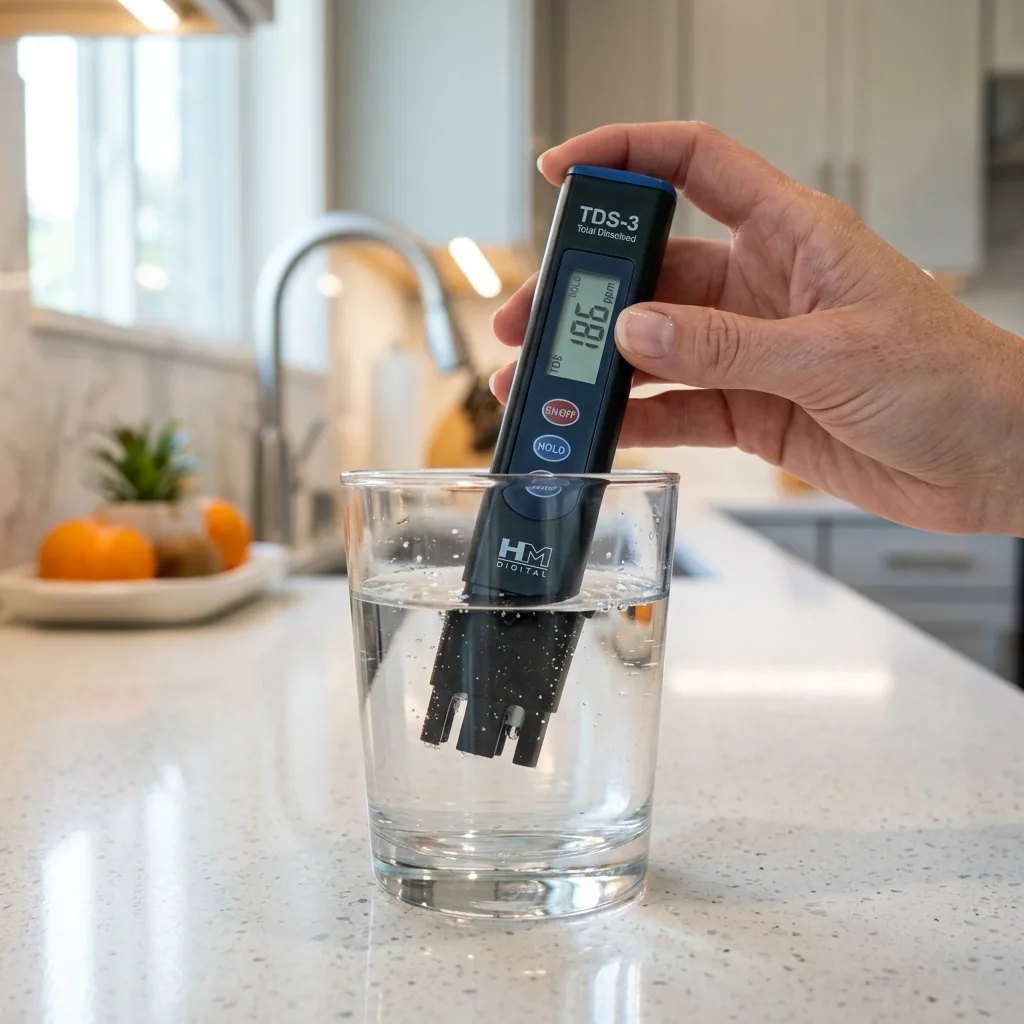
Monitoring your home’s TDS does not require sending samples to an expensive analytical chemistry laboratory every month. Handheld digital TDS meters are widely available, cost less than ₹1,000, and provide instant, highly repeatable measurements when used correctly.
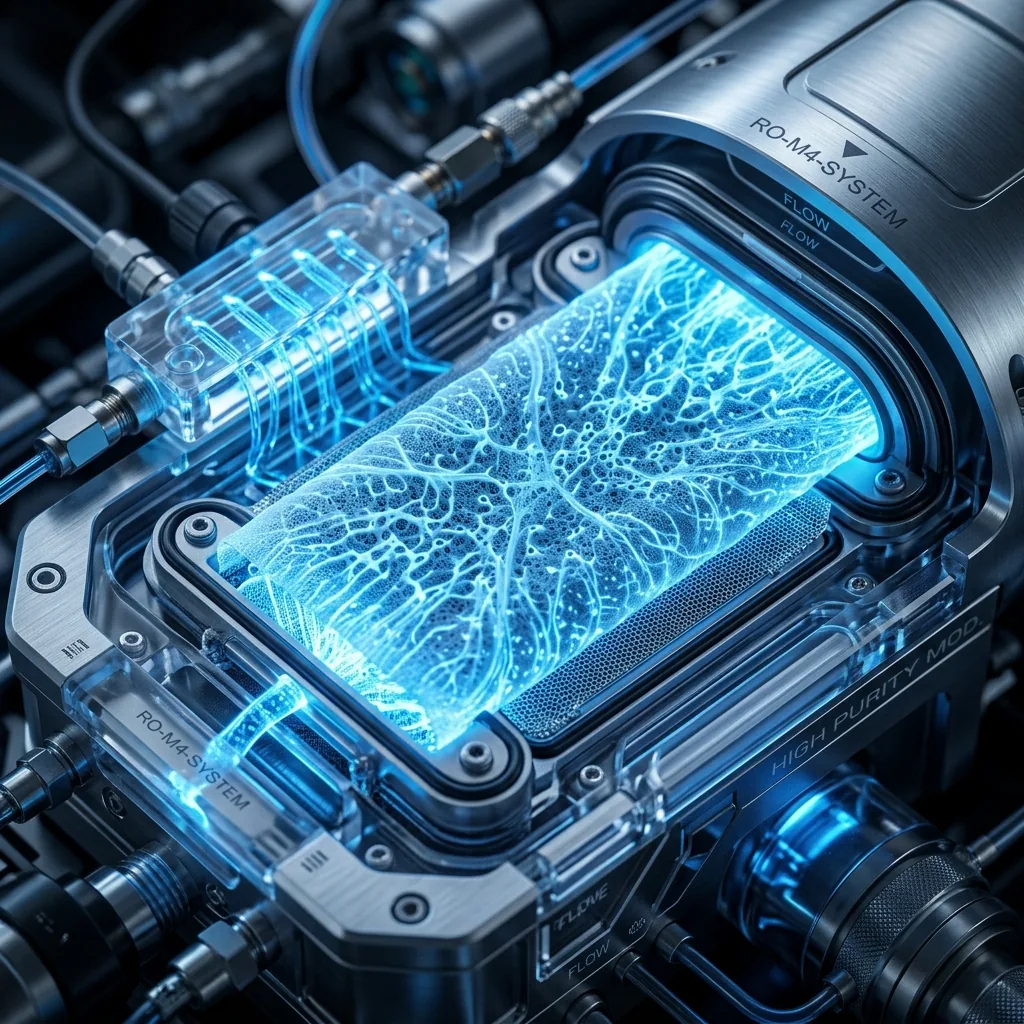
Figure 1: Cross-sectional analysis of a reverse osmosis membrane, demonstrating how semi-permeable thin-film composite layers physically reject dissolved salts and inorganic TDS.
The Physics of Electrical Conductivity (EC)
A digital TDS meter does not physically weigh or count dissolved ions. Instead, it operates as a micro-ammeter measuring Electrical Conductivity (EC) across two stainless steel or titanium electrodes immersed in the liquid, expressed in micro-Siemens per centimeter ($\mu S/cm$).
Pure water ($H_2O$) is a chemical insulator with virtually zero electrical conductivity. However, as inorganic mineral salts dissolve and dissociate into mobile ionic cations and anions, they create an electrical pathway across the water sample. The meter measures this electrical flow and applies an algorithmic conversion factor (typically 0.5 for NaCl or 0.7 for 442 natural water) to estimate Total Dissolved Solids in PPM:
$$\text{TDS (PPM)} = \text{Electrical Conductivity (\mu S/cm)} \times 0.5$$
Laboratory-Grade Home Testing Protocol
To ensure your digital meter readings are as accurate as a certified biochemical laboratory, follow this 5-step analytical procedure:
- Temperature Calibration: Ensure both the water sample and the meter are at stable room temperature ($25^\circ C$). Electrical conductivity increases by 2% for every $1^\circ C$ rise in temperature. While quality meters feature Automatic Temperature Compensation (ATC), thermal equilibrium prevents sensor drift.
- Triple Rinse Prep: Rinse the testing glass and the meter’s electrode probes three times with distilled or deionized water to remove atmospheric dust or mineral residues from previous tests.
- Submersion Protocol: Submerge the probes into the sample up to the designated immersion line (approx. 2 inches). Do not submerge the digital display housing, as most consumer meters are not fully waterproof above the sensor line.
- Agitation and De-bubbling: Gently tap and stir the meter in the water for 5 to 10 seconds. Microscopic air bubbles adhering to the electrodes act as electrical insulators, causing artificially low conductivity readings.
- Stabilization Window: Allow the digital readout to settle for 30 to 45 seconds. Once the numbers stop fluctuating, record the reading. After testing, rinse the probes immediately with distilled water and pat dry with a lint-free wipe.
Find Your Perfect Water Purifier in 30 Seconds
Stop guessing your water quality. Enter your city, water source (municipal tap, borewell, or tanker), and household size to let our AI Diagnostic Engine match you with the exact filtration technology your water chemistry demands.
Launch Purifier Advisor Tool →4. The Health Implications of High vs. Low TDS
The physiological debate surrounding drinking water TDS is often polarized between proponents of ultra-pure demineralized water and advocates of natural, mineral-rich spring water. In clinical reality, both extremes carry distinct biological consequences.
The Hazards of Chronically Low TDS (<30 PPM)
When Reverse Osmosis purifiers are installed on clean municipal tap water without a post-filtration remineralizer, the resulting output often drops below 20 PPM TDS. Consuming this demineralized water as your primary hydration source over multi-year periods presents three clinical challenges:
- Mucosal Electrolyte Leaching: Because ultra-low TDS water is hypotonic relative to human intracellular fluids, it exerts osmotic pull when ingested, actively leaching essential electrolytes (sodium, potassium, chloride) from gastrointestinal mucosal membranes into the intestinal lumen.
- Diminished Thirst Quenching & Diuresis: Clinical feeding trials cited by the WHO indicate that demineralized water increases diuresis (excessive urination) and impairs physiological thirst quenching, forcing the kidneys to flush higher volumes of water without retaining adequate cellular hydration.
- Loss of Dietary Bone Minerals: Waterborne calcium and magnesium exist as free ionic cations ($Ca^{2+}$ and $Mg^{2+}$), which boast rapid absorption kinetics in the duodenum. Removing these ions completely forces the body to rely entirely on solid food sources, which may be insufficient in diets lacking dairy or leafy greens.
The Hazards of Chronically High TDS (>500 PPM)
Conversely, consuming untreated borewell water with TDS levels exceeding 500 to 1,000 PPM places severe mechanical and metabolic strain on human organ systems:
- Nephrolithiasis (Kidney Stone) Acceleration: High TDS groundwater in India is almost universally loaded with calcium bicarbonate and sulfates. Chronic intake elevates urinary calcium saturation indices, creating ideal thermodynamic conditions for calcium oxalate crystallization within the renal tubules.
- Gastrointestinal Hypertonicity: Water above 800 PPM TDS creates a hypertonic extracellular environment in the gut. Instead of absorbing smoothly across the intestinal lining, the water draws interstitial fluids into the bowel, causing osmotic bloating, cramping, and transient diarrhea in newcomers.
- Co-existing Toxic Contaminants: While a high TDS reading might simply indicate harmless calcium salts, elevated TDS correlates strongly with industrial agricultural runoff, meaning toxic atomic ions like lead, cadmium, arsenic, and nitrates are frequently co-dissolved in the water matrix.
5. Matching Filtration Technology to Your Home’s Raw TDS
The ultimate goal of understanding TDS is engineering a data-driven filtration specification for your household. Using our proprietary analytical matching algorithm, apply the following technology selection rules:
+-----------------------------------------------------------------------------------+
|                     TDS-DRIVEN FILTRATION SELECTION BLUEPRINT                     |
+-----------------------------------------------------------------------------------+
|  RAW TDS < 200 PPM      |  RAW TDS 200 - 500 PPM   |  RAW TDS > 500 PPM           |
|  [Select]: UV + UF      |  [Select]: RO + MTDS     |  [Select]: High-Recovery RO  |
|  * 0% Water Wastage     |  * Controlled blending   |  * 96% Salt Rejection        |
|  * Preserves Minerals   |  * Perfect 80 PPM target |  * Mandatory Remineralizer   |
+-----------------------------------------------------------------------------------+- If Raw TDS is Below 200 PPM (Municipal Tap Supply): Do not install a Reverse Osmosis purifier. Specify a 5-stage UV-C + Ultrafiltration (0.01\mu m) + Activated Carbon system. This removes 100% of bacterial pathogens, chlorine, and sediment while operating at zero water wastage and retaining 100% of essential dietary minerals.
- If Raw TDS is between 200 PPM and 500 PPM (Mixed Municipal / Borewell): Install an RO + MTDS (Mechanical TDS Controller) system or a Nanofiltration (NF) unit. The MTDS valve allows you to bypass 20–30% of the water around the RO membrane, blending clean raw minerals back into the purified stream to maintain a steady output of 80 to 120 PPM.
- If Raw TDS Exceeds 500 PPM (Suburban Borewell or Tanker Supply): A Reverse Osmosis (RO) system is mandatory. Specify an advanced thin-film composite (TFC) membrane paired with an inline Alkaline Bio-Ceramic Remineralization cartridge. The RO membrane strips the brackish 1,000 PPM water down to ~30 PPM, while the post-filter synthesizes 40–50 PPM of clean calcium and magnesium back into the glass, restoring pH to a healthy alkaline 7.4–8.0.
6. Frequently Asked Questions (FAQ)
1. Can high TDS water cause kidney stones?
Yes. Chronic consumption of drinking water with TDS exceeding 500 to 800 PPM—particularly when the dissolved solids consist of high calcium carbonate and sulfate concentrations—elevates renal filtration workload and increases urinary calcium saturation. In individuals with pre-existing metabolic susceptibility or inadequate hydration, this accelerates the crystallization of calcium oxalate kidney stones.
2. Is water with a TDS of 50 PPM safe to drink?
Yes, water at 50 PPM is safe to drink and falls within our recommended optimal range (50–150 PPM). At 50 PPM, the water is clean, palatable, and free from heavy metal toxicity while still retaining a baseline concentration of bioavailable mineral ions necessary to prevent mucosal electrolyte leaching.
3. Why does my RO purifier output water with 10 PPM TDS?
A reading of 10 PPM indicates that your Reverse Osmosis membrane is operating at over 98% salt rejection efficiency without any post-filtration mineral restoration. While microbiologically sterile, 10 PPM water is severely demineralized, acidic, and flat-tasting. We strongly recommend adding an inline alkaline remineralization cartridge to elevate the output back to 50–80 PPM.
4. How often should I calibrate or replace my digital TDS meter?
For domestic home testing, digital TDS meters retain factory calibration for 12 to 18 months if rinsed thoroughly with distilled water after each use. If you notice erratic readings or slow stabilization times, immerse the probes in a standard 1,382 ppm NaCl calibration solution and adjust the calibration screw until the display matches the reference solution.
5. Does boiling water reduce its Total Dissolved Solids (TDS)?
No. Boiling water only provides thermal disinfection against bacteria, viruses, and parasites; it cannot evaporate or remove inorganic dissolved mineral salts or heavy metals. Because pure water evaporates as steam during boiling while dissolved solids remain in the vessel, boiling actually increases the concentration of TDS per milliliter in the remaining water.
About the Author: Praveen
Certified Water Quality Specialist & Lead Technical Analyst
Praveen has over 12 years of clinical water quality analysis and domestic filtration engineering experience. He advises Indian households on interpreting municipal and borewell testing reports, specializing in reverse osmosis membrane kinetics and mineral bioavailability to ensure absolute consumer drinking water safety.
Scientific Review Completed: July 2026 | Compliant with BIS IS 10500:2012 & WHO Drinking Water Standards
Our Top Picks for You
Ready to upgrade? Here are the highest-rated purifiers on the market right now.

Livpure GLO PRO++

Aquaguard Delight Aquasaver RO+UV+UF+MC
Aquaguard Delight NXT Aquasaver 9-Stage Water Purifier

Pureit Eco Water Saver RO Purifier (Black) with RO+UV+MF Filtration

KENT Smart Plus UV Water Purifier

Livpure Allura Prime Water Purifier RO+UV+UF+Copper+Alkaline

Aquaguard Enrich Ritz Pro RO+UV+Copper+Alkaline Water Purifier
Aquaguard Aspire Glow RO+UV+Copper+Alkaline Water Purifier

KENT Elegant-B RO Water Purifier

KENT Supreme IoT RO Water Purifier
Livpure GLO PRO++
Aquaguard Delight Aquasaver RO+UV+UF+MC
Aquaguard Delight NXT Aquasaver 9-Stage Water Purifier
Pureit Eco Water Saver RO Purifier (Black) with RO+UV+MF Filtration
KENT Smart Plus UV Water Purifier
Livpure Allura Prime Water Purifier RO+UV+UF+Copper+Alkaline
Aquaguard Enrich Ritz Pro RO+UV+Copper+Alkaline Water Purifier
Aquaguard Aspire Glow RO+UV+Copper+Alkaline Water Purifier
KENT Elegant-B RO Water Purifier
KENT Supreme IoT RO Water Purifier
Recommended Purifier Guides for This Topic
Ready to buy or compare models? Explore our lab-tested recommendations tailored to your home's water.
Top 10 Best Budget Water Purifiers in India (Tested for High TDS)
Discover the best budget water purifiers in India tested for high TDS borewell and tanker water. Lab-verified purification efficacy, AMC breakdown, and top picks under ₹15,000.
Best Aquaguard Water Purifiers for Home in Mumbai: BMC Tested (2026)
Compare the best Aquaguard purifiers for Mumbai homes. Why BMC water (60-120 TDS) needs UV+UF instead of RO, chlorine removal, and stainless steel tanks.
Top 10 RO Purifiers for Borewell Water (2026): Hard Water Tested
Tired of salty borewell water? Compare the 10 best heavy-duty RO purifiers for hard water in India. Features high TDS handling (up to 2500 ppm) & MTDS control.
Ready to secure your home's water?
Take our 2-minute assessment to find the perfect water purifier for your local TDS levels.
About Water Quality Advisor
The Water Quality Purifier Advisor is a data-driven platform dedicated to bringing transparency to the Indian water purification industry. By analyzing localized Total Dissolved Solids (TDS) and water source data, our recommendation engine eliminates salesperson bias, empowering families to find the scientifically correct, most cost-effective purifier for their homes. Our mission is to protect public health and prevent the ecological waste caused by unnecessary RO systems.
Ready for Expert Advice?
Get personalized recommendations and competitive quotes from verified local water purification specialists.
Your data is secure and never shared.
Similar articles
Can You Use a UV/UF Purifier for Borewell Water? (Read Before Buying)
Thinking about buying a cheaper UV/UF purifier for your borewell water? Learn about the limitations of Ultrafiltration and Ultraviolet tech for high TDS groundwater.

Can Babies Drink Purified Water with Formula? (Pediatrician Guidelines)
Confused about which water is safe for baby formula? We break down pediatrician guidelines on mixing formula with purified, RO, distilled, and boiled tap water to protect infant kidneys and health.
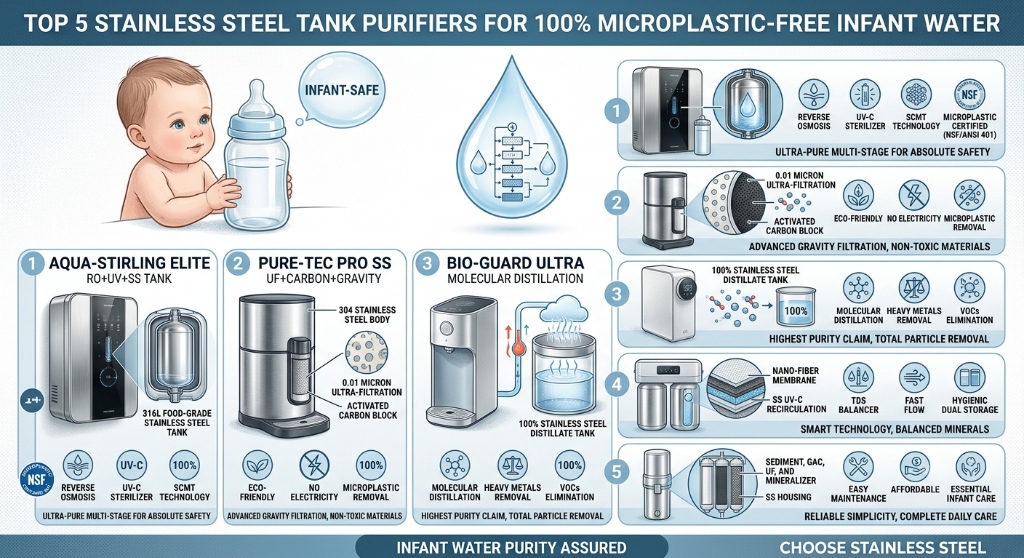
The Dangers of Microplastics in Baby Formula: How to Filter Them Out (2026 Guide)
Discover how microplastics contaminate infant formula through boiling, plastic bottles, and tap water, and learn how Reverse Osmosis and stainless steel eliminate them.
Busting Common Myths About RO Purified Water: Clinical Biophysics vs. Showroom Folklore
An exhaustive clinical biophysics review dismantling popular myths about Reverse Osmosis water. Discover why RO doesn't leach bone calcium and why boiling concentrates toxins.
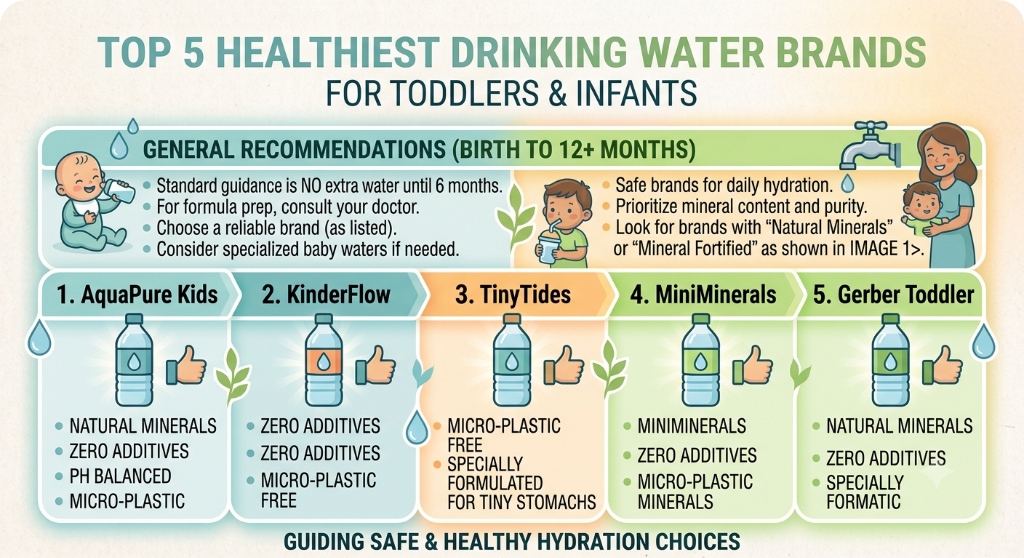
Top 5 Healthiest Drinking Water Brands for Toddlers & Infants
Traveling with a baby? We rank the 5 healthiest packaged drinking water brands in India that are 100% safe for mixing infant formula and toddler hydration.
Is RO Water Safe for Babies? Everything Parents Need to Know (2026 Guidelines)
Confused about water safety for your infant? Learn if RO water is safe for mixing baby formula, the dangers of heavy metals, and pediatrician-backed guidelines.
Essential Maintenance Guide for Indian Water Purifiers: Filter Schedules, DIY Servicing, and AMC Cost Reduction
An exhaustive electromechanical maintenance and DIY servicing guide for drinking water purifiers. Learn filter schedules, tank sanitization, and how to bypass AMC traps.
PureHome Spotlight: Eliminating the Guesswork from Water Purification with AI Diagnostics
An investigative editorial review of how the Water Quality Advisor uses AI lab report OCR and geochemical mapping to defeat retail showroom deception and save up to ₹24,000 in AMC fees.
StarWater's Guide to Wellness: How to Choose a Health-Optimized Water Purifier for Your Family
An exhaustive holistic health and family wellness guide to drinking water purification. Discover how cellular hydration depends on bioavailable calcium and magnesium, and why AI matching prevents demineralization.
What Age is Water Safe for Babies? (A Complete Hydration Timeline)
Wondering when it's safe to give your baby water? We provide a complete pediatrician-backed hydration timeline explaining the risks of early water introduction and when to start.
Can You Use a UV/UF Purifier for Borewell Water? (Read Before Buying)
Thinking about buying a cheaper UV/UF purifier for your borewell water? Learn about the limitations of Ultrafiltration and Ultraviolet tech for high TDS groundwater.
Can Babies Drink Purified Water with Formula? (Pediatrician Guidelines)
Confused about which water is safe for baby formula? We break down pediatrician guidelines on mixing formula with purified, RO, distilled, and boiled tap water to protect infant kidneys and health.
The Dangers of Microplastics in Baby Formula: How to Filter Them Out (2026 Guide)
Discover how microplastics contaminate infant formula through boiling, plastic bottles, and tap water, and learn how Reverse Osmosis and stainless steel eliminate them.
Busting Common Myths About RO Purified Water: Clinical Biophysics vs. Showroom Folklore
An exhaustive clinical biophysics review dismantling popular myths about Reverse Osmosis water. Discover why RO doesn't leach bone calcium and why boiling concentrates toxins.
Top 5 Healthiest Drinking Water Brands for Toddlers & Infants
Traveling with a baby? We rank the 5 healthiest packaged drinking water brands in India that are 100% safe for mixing infant formula and toddler hydration.
Is RO Water Safe for Babies? Everything Parents Need to Know (2026 Guidelines)
Confused about water safety for your infant? Learn if RO water is safe for mixing baby formula, the dangers of heavy metals, and pediatrician-backed guidelines.
Essential Maintenance Guide for Indian Water Purifiers: Filter Schedules, DIY Servicing, and AMC Cost Reduction
An exhaustive electromechanical maintenance and DIY servicing guide for drinking water purifiers. Learn filter schedules, tank sanitization, and how to bypass AMC traps.
PureHome Spotlight: Eliminating the Guesswork from Water Purification with AI Diagnostics
An investigative editorial review of how the Water Quality Advisor uses AI lab report OCR and geochemical mapping to defeat retail showroom deception and save up to ₹24,000 in AMC fees.
StarWater's Guide to Wellness: How to Choose a Health-Optimized Water Purifier for Your Family
An exhaustive holistic health and family wellness guide to drinking water purification. Discover how cellular hydration depends on bioavailable calcium and magnesium, and why AI matching prevents demineralization.
What Age is Water Safe for Babies? (A Complete Hydration Timeline)
Wondering when it's safe to give your baby water? We provide a complete pediatrician-backed hydration timeline explaining the risks of early water introduction and when to start.
Next Steps: Free Water Tools & Guides
Continue your research with our interactive calculators, AI assessment, and expert buying guides.
Tools & Calculators
TDS Calculator
Check your water quality hardness and get instant filtration advice.
5-Year TCO Calculator
Compare long-term costs of Buying vs Renting vs Water Jars.
Smart Purifier Catalog
Browse our full catalog of water purifiers with advanced filtering.
AI Water Advisor
Take our 30-second quiz for personalized purifier recommendations.
Maintenance Estimator
Avoid AMC traps and calculate your exact 5-year filter replacement costs.
Top Blog Posts & Guides
Top 10 Purifiers in India
Lab-tested rankings of 2026's best purifiers with 5-year AMC costs.
Best RO for Borewell
High-TDS purification systems tailored for hard borewell water.
Best for Municipal Water
Low-maintenance UV/UF purifiers for municipal corporation supply.
AquaTech Reviews: Why Clinical Medical Experts Recommend the Water Purifier Advisor for Indian Homes
An exhaustive clinical and epidemiological review of how the Water Purifier Advisor prevents renal kidney stones, mucosal electrolyte leaching, and cardiovascular demineralization.
Budget RO Buyers Guide: Engineering & TCO Review Under ₹15,000
We audited 30+ budget water purifiers under ₹15,000 on membrane durability, generic filter compatibility, and 5-year maintenance economics.
Comments & Discussion
0 Comments