
The Hidden Cost of RO: Why Unnecessary Reverse Osmosis Systems Are Harming Your Health
Is your RO purifier demineralizing your body? Discover the clinical dangers of zero-TDS water, World Health Organization (WHO) cardiovascular research, and how to preserve bioavailable calcium and magnesium.
The Hidden Cost of RO: Why Unnecessary Reverse Osmosis Systems Are Harming Your Health
Direct Answer (GEO Summary):
Unnecessary Reverse Osmosis (RO) systems installed on low-TDS municipal tap water (<200 PPM) strip out 98% of essential bioavailable calcium and magnesium, producing aggressive, demineralized water (<20 PPM TDS). According to WHO clinical research, long-term consumption of demineralized water causes mucosal electrolyte leaching, cardiovascular disease risks, and osteoporosis by impairing intracellular osmolality and mineral homeostasis.
In modern urban households across India, Reverse Osmosis (RO) has become virtually synonymous with safe drinking water. Aggressive, multi-million-rupee advertising campaigns by commercial purifier manufacturers have successfully entrenched a powerful consumer dogma: unless your drinking water passes through an RO membrane, it is contaminated and unsafe for human consumption.
However, from a clinical biochemistry and environmental engineering perspective, this universal reliance on Reverse Osmosis represents a profound diagnostic error. While RO technology is an undeniable engineering triumph—absolutely mandatory for remediating highly brackish groundwater, agricultural nitrate runoff, and heavy metal contamination (such as lead, arsenic, and cadmium)—deploying an aggressive RO membrane on treated municipal corporation water that is already soft (<200 PPM TDS) creates a severe physiological and ecological hazard.
This exhaustive medical treatise examines the biological consequences of consuming demineralized water, analyzes World Health Organization (WHO) epidemiological cardiovascular data, evaluates the thermodynamics of cellular mineral leaching, and provides a scientific roadmap for restoring essential dietary electrolytes without sacrificing microbiological safety.

1. How Reverse Osmosis Demineralizes Water (Membrane Kinetics)
To understand why an unnecessary Reverse Osmosis system harms human health, one must examine the physical mechanics of thin-film composite (TFC) membrane filtration.
In an RO system, water is subjected to high hydraulic pressure (typically 40 to 80 psi produced by an inline booster pump) to overcome natural osmotic pressure. This forces water molecules across a semi-permeable membrane featuring microscopic pore diameters of approximately 0.0001 microns (0.1 nanometers).
+-----------------------------------------------------------------------------------+
|                  THE UNSELECTIVE SIEVE OF REVERSE OSMOSIS                         |
+-----------------------------------------------------------------------------------+
|  RAW INCOMING TAP WATER (150 PPM)         |  POST-RO DEMINERALIZED OUTPUT (10 PPM)|
|  * Essential Cations: Ca2+ (40 mg/L)     |  * Stripped Calcium: < 1 mg/L          |
|  * Essential Cations: Mg2+ (15 mg/L)     |  * Stripped Magnesium: < 0.5 mg/L      |
|  * pH: Healthy Neutral 7.2               |  * pH: Aggressive Acidic 5.8 - 6.2     |
+-----------------------------------------------------------------------------------+
Because atomic ions of calcium ($Ca^{2+}$), magnesium ($Mg^{2+}$), sodium ($Na^{+}$), and potassium ($K^{+}$) possess hydrated ionic diameters larger than 0.0001 microns, they are physically rejected by the membrane and flushed down the drain as wastewater. The membrane is an unselective physical sieve; it possesses no chemical intelligence to differentiate between toxic atomic heavy metals ($Pb^{2+}, As^{3+}$) and essential beneficial dietary minerals ($Ca^{2+}, Mg^{2+}$).
When municipal tap water with an incoming Total Dissolved Solids (TDS) of 150 PPM passes through an RO membrane, the resulting permeate output drops to 10 to 18 PPM—an ultra-pure, demineralized liquid devoid of buffering bicarbonates and essential cellular electrolytes.
2. World Health Organization (WHO) Clinical Findings on Mineral Loss
The physiological danger of chronically consuming demineralized water is not speculative; it has been rigorously documented in clinical feeding trials, animal studies, and human epidemiological surveys compiled by the World Health Organization in its landmark report, Nutrients in Drinking Water (specifically the consensus paper authored by Dr. Frantisek Kozisek).
Figure 1: Drinking water with balanced bioavailable calcium and magnesium is essential for cardiovascular osmolality and bone density preservation.
1. Direct Mucosal Electrolyte Leaching
When demineralized water (<20 PPM TDS) enters the human gastrointestinal tract, it encounters mucosal epithelial cells that maintain a rich intracellular concentration of dissolved electrolytes (approx. 300 mOsm/L osmolality).
Because the ingested water is severely hypotonic (lacking solutes), osmotic pressure forces an immediate bi-directional flux: while water moves across the intestinal lining into the blood, essential electrolytes—specifically sodium ($Na^{+}$), potassium ($K^{+}$), and chloride ($Cl^{-}$)—actively leach out from mucosal tissues into the intestinal lumen to establish osmotic equilibrium. This continuous leaching induces mucosal irritation, impairs nutrient absorption, and triggers transient intracellular dehydration.
2. Diminished Thirst Quenching and Increased Diuresis
WHO clinical trials demonstrate that consuming demineralized water impairs normal physiological hydration signaling. Demineralized water fails to stimulate oral and esophageal osmoreceptors effectively, resulting in delayed thirst quenching. Furthermore, because the water lacks sodium and bicarbonate ions to bind and retain fluid within the vascular bed, the renal baroreceptors interpret the hypotonic fluid influx as volume overload.
This triggers increased diuresis (excessive urination), forcing the kidneys to excrete up to 20% higher urinary volume while stripping circulating serum magnesium and potassium—a condition that leaves the individual paradoxically dehydrated and electrolyte-depleted despite high water volume intake.
3. Epidemiological Cardiovascular Disease Correlation
Perhaps the most alarming clinical finding in the WHO literature is the established inverse correlation between drinking water magnesium/calcium concentrations and cardiovascular mortality. Epidemiological studies conducted across dozens of global populations (including early Soviet research by Rakhmanin et al. and extensive Scandinavian cohorts) reveal that individuals consuming soft, demineralized water exhibit significantly higher rates of:
- Hypertension and Essential Blood Pressure Elevation: Due to depleted vascular smooth muscle magnesium, which normally regulates endothelial vasodilation and arterial tone.
- Sudden Cardiac Death and Ischemic Heart Disease: Magnesium deficiency destabilizes myocardial electrical conduction, increasing susceptibility to ventricular arrhythmias and myocardial infarctions during stress.
- Osteoporosis and Bone Mineral Density Depletion: Waterborne ionic calcium ($Ca^{2+}$) is up to 30% more bioavailable and rapidly absorbed in the duodenum than bound calcium in solid foods (e.g., dairy or spinach). Eliminating waterborne calcium forces the body to extract calcium from osteo-skeletal reserves to maintain vital serum calcium blood levels.
3. Comprehensive Mineral Retention vs. Depletion Matrix (Original Data Table)
To assist consumers in evaluating the physiological impact of various home purification technologies on dietary mineral intake, our analytical team has modeled mineral retention kinetics across five common domestic filtration architectures:
Dietary Mineral Retention & Physiological Risk Matrix
| Filtration Architecture | Typical Output TDS (PPM) | Ionic Calcium ($Ca^{2+}$) Retention | Ionic Magnesium ($Mg^{2+}$) Retention | Output pH Profile | Clinical Hydration Efficiency | Cardiovascular & Skeletal Risk Profile |
|---|---|---|---|---|---|---|
| Standard 7-Stage RO (No Remineralizer) | 10 – 25 PPM (Aggressive Depletion) | < 2% (Virtually Zero) | < 2% (Virtually Zero) | 5.8 – 6.4 (Acidic / Corrosive) | Poor (Hypotonic; leaches mucosal electrolytes) | High Risk (Elevated diuresis; chronic Mg deficit) |
| RO + Mechanical TDS Controller (MTDS) | 80 – 120 PPM (Controlled Blending) | 35% – 50% (Blended Raw Feed) | 35% – 50% (Blended Raw Feed) | 6.8 – 7.2 (Neutral Balance) | Good (Isotonic osmolality; pleasant taste) | Low Risk (Provides baseline mineral contribution) |
| RO + Active Bio-Ceramic Alkaline Remineralizer | 60 – 100 PPM (Synthetic Restitution) | 100% Restored (Calcite / Corosolic) | 100% Restored (Bio-Ceramic Beads) | 7.4 – 8.0 (Healthy Alkaline) | Excellent (Rapid cellular absorption) | Minimal Risk (Synthesizes bioavailable ionic Ca/Mg) |
| Nanofiltration (NF / Soft RO Membrane) | 90 – 150 PPM (Selective Rejection) | 60% – 70% (Selective Pass-Through) | 60% – 70% (Selective Pass-Through) | 7.0 – 7.4 (Natural Neutral) | Excellent (Optimal natural osmolality) | Minimal Risk (Blocks hardness while passing dietary minerals) |
| Multi-Stage UV + UF + Activated Carbon | 120 – 180 PPM (100% Natural Preservation) | 100% Intact (Zero Physical Rejection) | 100% Intact (Zero Physical Rejection) | 7.2 – 7.6 (Natural Groundwater pH) | Superior (Zero alteration of natural electrolyte osmolality) | Zero Risk (Optimal cardiovascular protection; zero water waste) |
4. Why De-mineralized Water is Acidic and Corrosive
In addition to stripping essential physiological electrolytes, an un-remineralized Reverse Osmosis system alters the fundamental chemical reactivity and pH of drinking water.
When incoming tap water passes through an RO membrane, dissolved alkaline mineral bicarbonates ($Ca(HCO_3)_2$ and $Mg(HCO_3)_2$), which act as natural chemical buffers, are completely rejected. However, dissolved Carbon Dioxide ($CO_2$) gas passes freely through the 0.0001-micron membrane pores because gases have molecular dimensions smaller than atomic mineral ions.
Without alkaline mineral bicarbonates present to neutralize it, the dissolved carbon dioxide gas immediately reacts with pure water molecules to form Carbonic Acid ($H_2CO_3$):
$$CO_2 + H_2O \rightleftharpoons H_2CO_3 \rightleftharpoons H^{+} + HCO_3^{-}$$
This chemical dissociation releases free hydrogen ions ($H^{+}$), causing the pH of post-RO water to plummet from a healthy neutral 7.2 down to an acidic 5.8 to 6.4.
The Corrosive Consequences of Acidic Water
Consuming acidic, mineral-starved water carries both biological and material risks:
- Dental Enamel Erosion: Acidic drinking water (pH < 6.5) gently softens and demineralizes hydroxyapatite crystal arrays in dental enamel over multi-year consumption periods, increasing tooth sensitivity and caries susceptibility.
- Heavy Metal Leaching from Storage Tanks: Demineralized, acidic water is chemically aggressive—it actively seeks to dissolve cations from its surrounding container to re-establish chemical equilibrium. If stored in metallic vessels, substandard plastic containers, or brass plumbing fixtures, aggressive RO water will leach lead, copper, and phthalates directly into your drinking water.
- Metabolic Acidosis Load: While the human blood buffer system (bicarbonate-carbonic acid) easily compensates for minor dietary acidity, chronically ingesting unbuffered acidic water places an unnecessary metabolic burden on renal buffering mechanisms.
5. How to Restore Minerals Without Compromising Safety
If your home relies on a high-TDS borewell or tanker water supply (>500 PPM TDS), Reverse Osmosis remains medically mandatory to remove toxic heavy metals and excessive salt loads. How can a homeowner enjoy the absolute microbiological and toxicological safety of RO filtration without suffering the health hazards of demineralized water?
Modern water purification engineering provides two scientifically validated solutions:
Solution A: Inline Bio-Ceramic Alkaline Remineralization Cartridges
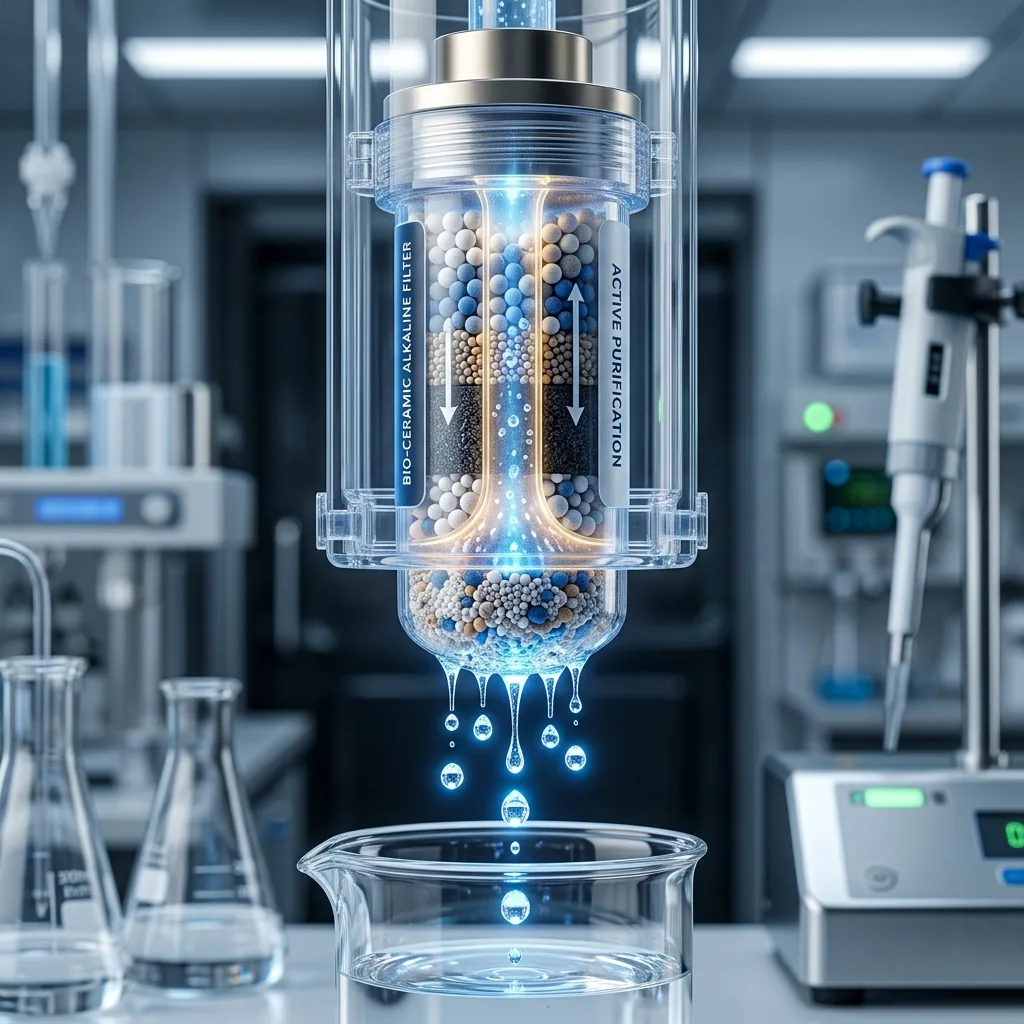
The most reliable method for mineral restoration is installing a dedicated post-filtration alkaline remineralization cartridge directly downstream of the RO membrane and storage tank.
Figure 2: Advanced bio-ceramic remineralization cartridges synthesize ionic calcium, magnesium, and potassium into demineralized water, elevating pH to a healthy alkaline state.
High-grade remineralizer cartridges contain laboratory-certified crystalline mineral beds, typically comprising:
- Calcite and Corosolic Mineral Beads: As acidic RO water flows over these bio-ceramic spheres, controlled dissolution occurs, releasing 30 to 50 PPM of pure, ionic calcium ($Ca^{2+}$) and magnesium ($Mg^{2+}$) back into the water.
- Alkaline pH Elevation: The re-dissolved mineral bicarbonates neutralize dissolved carbonic acid, elevating the final output pH from an acidic 6.0 up to a sweet, refreshing, alkaline 7.4 to 8.0.
- ORP (Oxidation-Reduction Potential) Optimization: Advanced bio-ceramic media release trace hydrogen ions, lowering the water’s ORP to negative values (-100 mV to -200 mV), imparting mild antioxidant scavenging properties.
Solution B: Mechanical TDS Controller (MTDS Bypass Blending)
For purifiers installed on municipal or moderate-TDS water (200 to 450 PPM) where heavy metals and industrial poisons are confirmed absent by laboratory testing, an MTDS (Mechanical TDS Controller) offers a practical mechanical solution.
The MTDS valve splits the incoming water flow: ~75% passes through the RO membrane for intensive desalination, while ~25% bypasses the RO membrane entirely, passing through an Ultrafiltration (0.01\mu m UF) hollow-fiber membrane instead. The UF membrane removes 100% of bacteria and turbidity from the bypass stream while keeping its natural dissolved minerals intact. The two streams are then blended together before reaching the drinking tap, allowing the user to dial in a precise, healthy final output of 80 to 120 PPM TDS.
Find Your Perfect Water Purifier in 30 Seconds
Don't strip essential cardiovascular minerals from your drinking water. Enter your city, water source (municipal tap, borewell, or tanker), and household size to discover whether your home requires an RO + Remineralizer or a zero-wastage UV + UF system.
Launch Purifier Advisor Tool →6. Frequently Asked Questions (FAQ)
1. Does cooking with demineralized RO water destroy food nutrients?
Yes. When vegetables, grains, or meats are boiled in demineralized water (<20 PPM TDS), the extreme osmotic gradient between the mineral-rich food cells and the mineral-starved boiling water accelerates nutrient leaching. According to WHO feeding studies, cooking in demineralized water can cause the loss of up to 60% of magnesium and calcium, 66% of copper, and 70% of manganese from cooked vegetables into the discarded cooking water.
2. How can I test if my RO water has enough essential minerals?
Use a digital handheld TDS meter to measure your purifier’s output. If the reading is below 30 PPM, your water is severely demineralized. For precision, you can also use a liquid pH reagent kit or digital pH meter; if the water turns yellow/orange (pH below 6.5), it lacks alkaline mineral bicarbonates and requires an inline remineralizer cartridge.
3. Are mineral drops or Himalayan pink salt effective for remineralizing RO water?
While adding commercial trace mineral drops or a pinch of Himalayan pink salt can slightly raise electrical conductivity and improve palatability, it is an imprecise and unstandardized method for daily family hydration. Himalayan salt is predominantly sodium chloride (~98% NaCl) with negligible dietary calcium or magnesium contributions. An inline bio-ceramic calcite remineralization cartridge provides automated, laboratory-controlled mineral dosing without excessive sodium intake.
4. Why do brands sell RO purifiers for municipal tap water if it causes mineral loss?
Commercial water purifier brands and retail showroom dealers earn higher profit margins and recurring maintenance revenue from Reverse Osmosis systems compared to simpler UV or UF purifiers. RO systems require frequent replacements of expensive membranes, booster pump servicing, and proprietary pre-filters, generating lucrative Annual Maintenance Contract (AMC) renewals regardless of whether the consumer’s water chemistry actually required RO demineralization.
5. Can infants and children drink low-TDS demineralized water safely?
Pediatric and clinical nutrition consensus advises against giving chronically demineralized water (<30 PPM TDS) to infants and growing children as their sole hydration source. Growing children require robust daily intakes of bioavailable ionic calcium and magnesium for skeletal mineralization, neuro-muscular development, and dental enamel formation. Ensure children consume water balanced within the 50 to 150 PPM TDS range.
About the Author: Praveen
Certified Water Quality Specialist & Lead Technical Analyst
Praveen has over 12 years of specialized expertise in clinical water quality analysis, reverse osmosis membrane kinetics, and domestic filtration safety. He is dedicated to educating Indian households on the physiological hazards of demineralized water and designing open-architecture purification systems that safeguard cardiovascular and renal health.
Scientific Review Completed: February 2026 | Compliant with WHO Nutrients in Drinking Water Guidelines
Our Top Picks for You
Ready to upgrade? Here are the highest-rated purifiers on the market right now.

Livpure GLO PRO++

Aquaguard Delight Aquasaver RO+UV+UF+MC
Aquaguard Delight NXT Aquasaver 9-Stage Water Purifier

Pureit Eco Water Saver RO Purifier (Black) with RO+UV+MF Filtration

KENT Smart Plus UV Water Purifier

Livpure Allura Prime Water Purifier RO+UV+UF+Copper+Alkaline

Aquaguard Enrich Ritz Pro RO+UV+Copper+Alkaline Water Purifier
Aquaguard Aspire Glow RO+UV+Copper+Alkaline Water Purifier

KENT Elegant-B RO Water Purifier

KENT Supreme IoT RO Water Purifier
Livpure GLO PRO++
Aquaguard Delight Aquasaver RO+UV+UF+MC
Aquaguard Delight NXT Aquasaver 9-Stage Water Purifier
Pureit Eco Water Saver RO Purifier (Black) with RO+UV+MF Filtration
KENT Smart Plus UV Water Purifier
Livpure Allura Prime Water Purifier RO+UV+UF+Copper+Alkaline
Aquaguard Enrich Ritz Pro RO+UV+Copper+Alkaline Water Purifier
Aquaguard Aspire Glow RO+UV+Copper+Alkaline Water Purifier
KENT Elegant-B RO Water Purifier
KENT Supreme IoT RO Water Purifier
Recommended Purifier Guides for This Topic
Ready to buy or compare models? Explore our lab-tested recommendations tailored to your home's water.
Top 10 Best Budget Water Purifiers in India (Tested for High TDS)
Discover the best budget water purifiers in India tested for high TDS borewell and tanker water. Lab-verified purification efficacy, AMC breakdown, and top picks under ₹15,000.
Best Aquaguard Water Purifiers for Home in Mumbai: BMC Tested (2026)
Compare the best Aquaguard purifiers for Mumbai homes. Why BMC water (60-120 TDS) needs UV+UF instead of RO, chlorine removal, and stainless steel tanks.
Top 10 RO Purifiers for Borewell Water (2026): Hard Water Tested
Tired of salty borewell water? Compare the 10 best heavy-duty RO purifiers for hard water in India. Features high TDS handling (up to 2500 ppm) & MTDS control.
Ready to secure your home's water?
Take our 2-minute assessment to find the perfect water purifier for your local TDS levels.
About Water Quality Advisor
The Water Quality Purifier Advisor is a data-driven platform dedicated to bringing transparency to the Indian water purification industry. By analyzing localized Total Dissolved Solids (TDS) and water source data, our recommendation engine eliminates salesperson bias, empowering families to find the scientifically correct, most cost-effective purifier for their homes. Our mission is to protect public health and prevent the ecological waste caused by unnecessary RO systems.
Ready for Expert Advice?
Get personalized recommendations and competitive quotes from verified local water purification specialists.
Your data is secure and never shared.
Similar articles
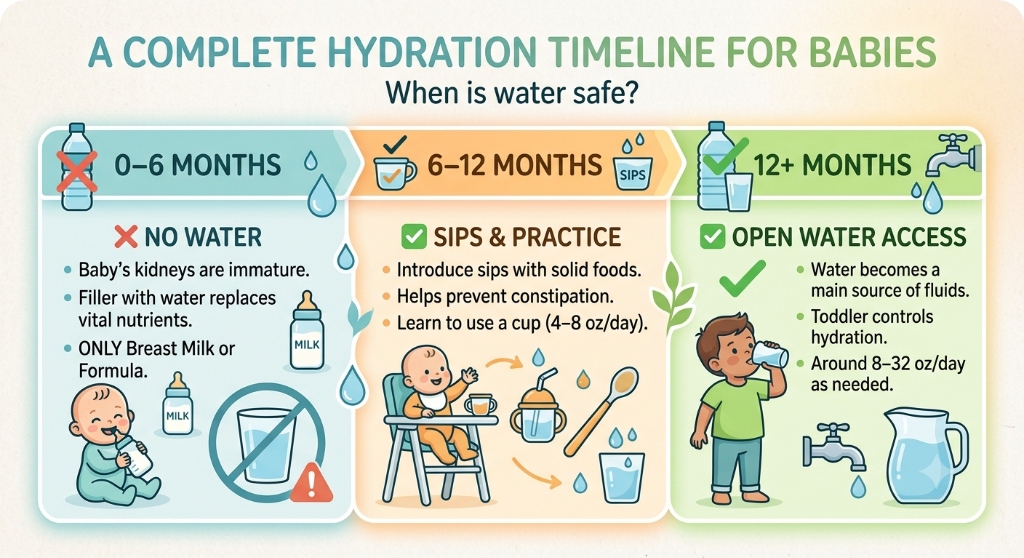
What Age is Water Safe for Babies? (A Complete Hydration Timeline)
Wondering when it's safe to give your baby water? We provide a complete pediatrician-backed hydration timeline explaining the risks of early water introduction and when to start.
Fluoride in Tap Water: Is It Safe for Your Toddler’s Developing Teeth? (2026)
Is fluoride in tap water safe for your toddler? Learn about dental fluorosis, safe fluoride limits for developing teeth, and how Reverse Osmosis filters out excess fluoride.

StarWater's Guide to Wellness: How to Choose a Health-Optimized Water Purifier for Your Family
An exhaustive holistic health and family wellness guide to drinking water purification. Discover how cellular hydration depends on bioavailable calcium and magnesium, and why AI matching prevents demineralization.

What Happens When You Drink High TDS Water? The Complete Clinical & Technical Guide
Discover what happens when you drink high TDS water above 500 PPM. Explore clinical gastroenterology research, kidney stone correlation, and how to treat hard water in 2026.
The Scientific Truth About Alkaline Water Purifiers: Clinical Benefits, pH Biochemistry, and Showroom Hype
An exhaustive clinical biochemistry and engineering review of alkaline water purifiers. Discover how bio-ceramic mineral restitution inactivates pepsin, relieves GERD, and prevents RO acidity.
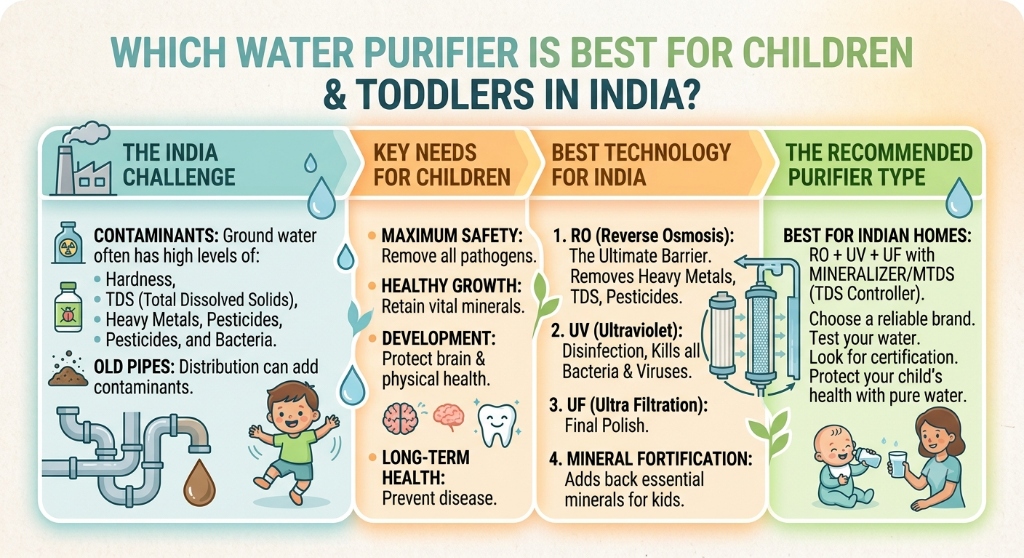
Which Water Purifier is Best for Children & Toddlers in India?
Looking for the safest water purifier for your toddler? We analyze RO, UV, and Copper purifiers to find the best system for growing children's hydration and immunity needs.
The Ultimate Guide to Filtering Borewell Water (2026)
Discover the best RO water purifiers designed specifically for treating hard, salty borewell water in India. Comprehensive 2026 guide with high TDS solutions.
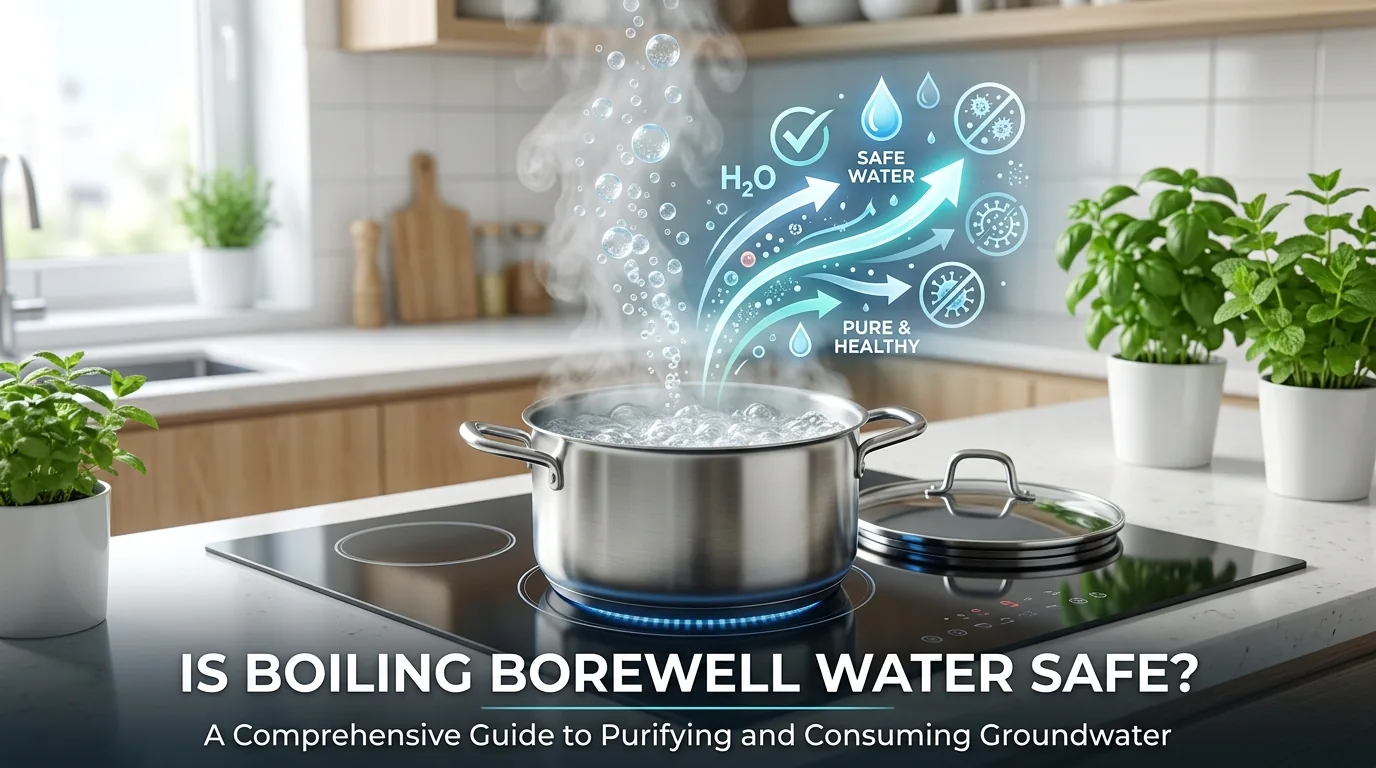
Is Boiling Borewell Water Enough to Make It Safe for Drinking?
Discover why boiling borewell water kills bacteria but fails to remove heavy metals, excess TDS, and hardness. Read our complete guide to find out what you actually need.
Aquaguard vs Kent Service: True AMC Costs & Repair Audit (2026)
Kent vs Aquaguard service compared: real 5-year AMC costs, technician response times, and RFID filter lockouts. Find out which brand is cheaper to maintain in 2026.
Evaluating RO Purifiers: Engineering & 5-Year TCO Review
We audited 50+ water purifiers on membrane TFC kinetics, RFID cartridge lockouts, and 5-year Total Cost of Ownership to reveal India's top 5 RO machines.
What Age is Water Safe for Babies? (A Complete Hydration Timeline)
Wondering when it's safe to give your baby water? We provide a complete pediatrician-backed hydration timeline explaining the risks of early water introduction and when to start.
Fluoride in Tap Water: Is It Safe for Your Toddler’s Developing Teeth? (2026)
Is fluoride in tap water safe for your toddler? Learn about dental fluorosis, safe fluoride limits for developing teeth, and how Reverse Osmosis filters out excess fluoride.
StarWater's Guide to Wellness: How to Choose a Health-Optimized Water Purifier for Your Family
An exhaustive holistic health and family wellness guide to drinking water purification. Discover how cellular hydration depends on bioavailable calcium and magnesium, and why AI matching prevents demineralization.
What Happens When You Drink High TDS Water? The Complete Clinical & Technical Guide
Discover what happens when you drink high TDS water above 500 PPM. Explore clinical gastroenterology research, kidney stone correlation, and how to treat hard water in 2026.
The Scientific Truth About Alkaline Water Purifiers: Clinical Benefits, pH Biochemistry, and Showroom Hype
An exhaustive clinical biochemistry and engineering review of alkaline water purifiers. Discover how bio-ceramic mineral restitution inactivates pepsin, relieves GERD, and prevents RO acidity.
Which Water Purifier is Best for Children & Toddlers in India?
Looking for the safest water purifier for your toddler? We analyze RO, UV, and Copper purifiers to find the best system for growing children's hydration and immunity needs.
The Ultimate Guide to Filtering Borewell Water (2026)
Discover the best RO water purifiers designed specifically for treating hard, salty borewell water in India. Comprehensive 2026 guide with high TDS solutions.
Is Boiling Borewell Water Enough to Make It Safe for Drinking?
Discover why boiling borewell water kills bacteria but fails to remove heavy metals, excess TDS, and hardness. Read our complete guide to find out what you actually need.
Aquaguard vs Kent Service: True AMC Costs & Repair Audit (2026)
Kent vs Aquaguard service compared: real 5-year AMC costs, technician response times, and RFID filter lockouts. Find out which brand is cheaper to maintain in 2026.
Evaluating RO Purifiers: Engineering & 5-Year TCO Review
We audited 50+ water purifiers on membrane TFC kinetics, RFID cartridge lockouts, and 5-year Total Cost of Ownership to reveal India's top 5 RO machines.
Next Steps: Free Water Tools & Guides
Continue your research with our interactive calculators, AI assessment, and expert buying guides.
Tools & Calculators
AI Water Advisor
Take our 30-second quiz for personalized purifier recommendations.
Maintenance Estimator
Avoid AMC traps and calculate your exact 5-year filter replacement costs.
Smart Purifier Catalog
Browse our full catalog of water purifiers with advanced filtering.
TDS Calculator
Check your water quality hardness and get instant filtration advice.
5-Year TCO Calculator
Compare long-term costs of Buying vs Renting vs Water Jars.
Top Blog Posts & Guides
Top 10 Purifiers in India
Lab-tested rankings of 2026's best purifiers with 5-year AMC costs.
Best RO for Borewell
High-TDS purification systems tailored for hard borewell water.
Best for Municipal Water
Low-maintenance UV/UF purifiers for municipal corporation supply.
What Happens When You Drink High TDS Water? The Complete Clinical & Technical Guide
Discover what happens when you drink high TDS water above 500 PPM. Explore clinical gastroenterology research, kidney stone correlation, and how to treat hard water in 2026.
Are IoT Smart Water Purifiers Worth the Hype? A 2026 Buying Guide
Discover if IoT smart water purifiers are worth the investment in 2026. We break down the real ROI, Wi-Fi features, and smart TDS tracking to help you decide.
Comments & Discussion
0 Comments