Understanding the Water Sources in Ludhiana
The water quality in any city heavily depends on its primary sources. In Ludhiana, the major water supply comes from Groundwater (Submersible pumps). Over the years, rapid urbanization and environmental changes have significantly impacted these sources. Municipal water is often treated at a central plant, but by the time it travels through kilometers of aging pipelines, it can pick up rust, sediment, and bacteria. Furthermore, households relying on supplementary borewells often face completely different challenges, primarily high mineral content and extreme hardness.
TDS Levels and Hardness Breakdown
TDS, or Total Dissolved Solids, is a critical metric for assessing drinking water. It represents the total concentration of dissolved substances (minerals, salts, metals) in the water. The average TDS in Ludhiana is reported to be around 400 ppm.
According to the Bureau of Indian Standards (BIS) and the WHO, water with a TDS level below 300 ppm is considered excellent for drinking. Water between 300-600 ppm is acceptable, but anything above that becomes increasingly unpalatable and may require advanced filtration like Reverse Osmosis (RO). Additionally, Ludhiana experiences high water hardness. Hard water contains high levels of calcium and magnesium, which not only affects the taste but can also lead to severe scaling in your kitchen appliances and plumbing fixtures.
Common Contaminants and Issues
Residents across Ludhiana frequently report the following problems:
- Industrial pollutants: This can have long-term health implications if consumed regularly without proper purification.
- Heavy Metals: This can have long-term health implications if consumed regularly without proper purification.
Expert Advice
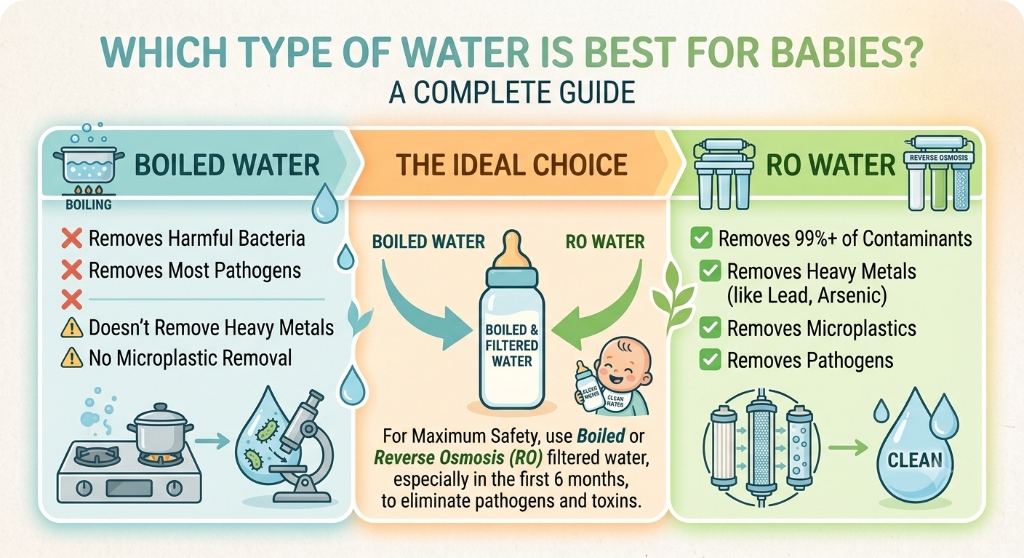
If you are facing these specific issues in Ludhiana, boiling water is no longer sufficient. Boiling only kills biological pathogens but does nothing to remove dissolved heavy metals, hardness, or chemicals. You need targeted filtration technology.
Why RO + UV is the Best Choice for Ludhiana
When selecting a water purifier, one size does not fit all. Based on the extensive analysis of Ludhiana's water profile—specifically the TDS of 400 ppm and high hardness—we strongly recommend a RO + UV water purifier.
Here is why this technology is superior for your location:
- Reverse Osmosis (RO): Absolutely essential for bringing down the high TDS levels and removing dissolved heavy metals. It forces water through a semi-permeable membrane, stripping away salts and hardness that boiling cannot remove.
- Ultraviolet (UV) Protection: UV lamps deactivate the DNA of bacteria, viruses, and cysts, ensuring that your water is microbiologically safe. This is especially crucial during the monsoon season when municipal pipes might leak.
Compare Ludhiana with Other Major Cities
Curious about how Ludhiana's water quality stacks up against other regions? Here is a quick comparison of average TDS levels and recommended technologies across major Indian cities:
| City | Average TDS (ppm) | Hardness | Recommended Purifier |
|---|---|---|---|
| Ludhiana (Current) | 400 | High | RO + UV |
| Nagpur | 250 | Low to Medium | UV + UF |
| Aurangabad | 350 | Medium | RO + UV |
| Kolkata | 300 | Medium | RO + UV |
| Kochi | 120 | Low | UV + UF |
Maintenance & AMC Guide
Buying the right purifier is only half the battle. Regular maintenance is what ensures your family gets safe drinking water year-round. Given Ludhiana's water profile:
- Sediment Filters: Should be changed every 3-4 months to prevent choking, especially if your water is turbid.
- Carbon Filters: Replace every 6 months to ensure effective removal of chlorine and bad odors.
- RO Membrane: In Ludhiana, an RO membrane typically lasts 1-2 years depending on your exact usage and incoming TDS. High hardness will degrade the membrane faster.
Avoid expensive, unnecessary AMC (Annual Maintenance Contracts) by using ourMaintenance Estimator to find the true cost of DIY vs Brand AMC filter replacements.
Frequently Asked Questions (FAQs)
What is the average TDS of water in Ludhiana?
The average TDS level in Ludhiana is approximately 400 ppm. This largely depends on whether your source is Groundwater (Submersible pumps).
Which water purifier is best for Ludhiana?
Based on the water quality, a RO + UV water purifier is highly recommended for households in Ludhiana.
Is tap water safe to drink in Ludhiana?
Tap water in Ludhiana often faces issues like Industrial pollutants, Heavy Metals. It is highly recommended to filter the water using a RO + UV purifier before drinking.